
 Bill Jackson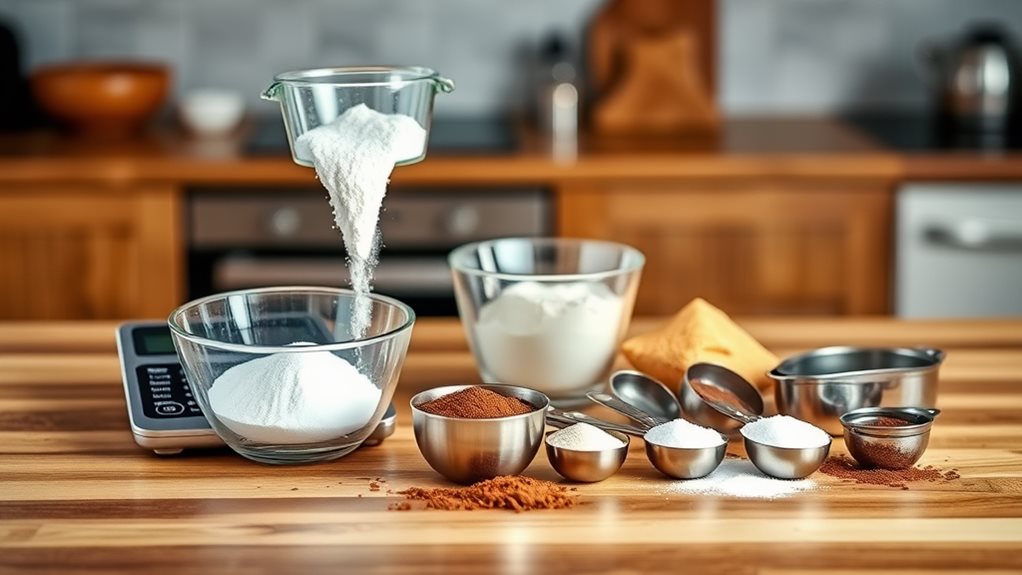
To measure baking ingredients like a pro, you need to prioritize accuracy and the right tools. Always use dry measuring cups for dry ingredients and liquid measuring cups for liquids. Weighing ingredients with a kitchen scale is the best way to eliminate guesswork, especially for larger quantities. Remember to sift flour before measuring for a lighter texture and to avoid overpacking. For liquids, fill to the desired line without lifting the cup; this gives you precision. Consistent measurements ensure reliable results, and exploring advanced tips can elevate your baking game.
Understanding Ingredient Types
When baking, understanding the different types of ingredients is crucial for achieving the desired results. Each ingredient has a unique density, which affects how it's measured and ultimately influences the final product. For instance, flour and sugar have different densities, meaning that one cup of flour doesn't weigh the same as one cup of sugar. This discrepancy can lead to inconsistencies in your baking if you rely solely on volume measurements.
To ensure accuracy, you'll often need to perform measurement conversions. For example, if a recipe calls for grams but you only have a measuring cup, knowing the weight of specific ingredients can help. A cup of all-purpose flour typically weighs around 120 grams, while a cup of granulated sugar weighs approximately 200 grams. Understanding these conversions minimizes errors and helps maintain the integrity of your baked goods.
Moreover, some ingredients, like brown sugar, should be packed into the measuring cup, while others, like powdered sugar, should be sifted. By grasping the nuances of ingredient density and measurement conversions, you'll be better equipped to create delicious baked treats consistently.
Essential Measuring Tools
Having the right measuring tools at your disposal is essential for successful baking. Accurate measurements can make or break your recipe, so invest in quality measuring cups and measuring spoons.
For dry ingredients, opt for a set that includes both standard and metric measurements to facilitate ingredient conversions. A kitchen scale is invaluable for precise measurement, especially when working with larger quantities or recipes that require exact ratios.
Don't overlook the importance of a digital thermometer for checking temperatures in recipes that involve heat. This tool ensures that your baked goods reach the perfect internal temperature, enhancing flavor and texture.
When measuring dry ingredients, use the leveling technique: spoon the ingredient into your measuring cup, then level it off with a straight edge for accuracy.
Proper storage containers are also crucial; they help maintain ingredient freshness and prevent contamination, ultimately supporting measurement accuracy.
Dry Ingredients: Best Practices
How can you ensure the accuracy of your dry ingredient measurements? Proper measurement of dry ingredients is crucial for baking success.
Different flour types, such as all-purpose, bread, and cake flour, have varying densities, which can lead to significant discrepancies if measured incorrectly. Similarly, sugar varieties like granulated, brown, and powdered sugar can also impact your recipe's outcome.
To get it right, follow these best practices:
- Use the right measuring tool: For dry ingredients, use dry measuring cups and spoons instead of liquid ones.
- Spoon and level: Spoon the ingredient into your measuring cup without packing it down, then use a straight edge to level it off for an accurate measurement.
- Weigh when possible: Investing in a kitchen scale can eliminate guesswork, especially when dealing with various flour types and sugar varieties.
Liquid Ingredients: Accurate Measurement
Accurate measurement of liquid ingredients is just as important as that of dry ones in the baking process. To achieve this, you'll want to use the right measuring cups specifically designed for liquids. Unlike dry measuring cups, liquid measuring cups typically have a spout for easy pouring and a clear scale marked on the side, allowing you to see the measurement from eye level.
When measuring liquids, it's crucial to account for liquid density, as different liquids can weigh differently. For example, a cup of water and a cup of honey will have different weights due to their varying densities. Always fill your measuring cup to the desired line without lifting it, which helps you avoid parallax error—a common mistake that can lead to inaccuracies.
To ensure precision, you should also consider using a kitchen scale, especially for recipes requiring specific amounts. Weighing liquids can provide a more accurate measurement than volume alone, particularly with denser liquids.
The Importance of Sifting
Sifting flour and other dry ingredients is a crucial step in baking that can significantly impact your final product. It's not just about breaking up clumps; it also aerates the ingredients, ensuring even distribution.
Different flour types, such as all-purpose, cake, and bread flour, can behave differently if not sifted properly, which can lead to inconsistent textures and flavors.
Here are a few sifting techniques that can enhance your baking:
- Use a Fine Mesh Sieve: This helps catch any lumps while allowing finer particles to pass through, creating a smoother mixture.
- Sift Before Measuring: Sifting flour before measuring can result in a lighter texture since it prevents overpacking.
- Sift with Other Dry Ingredients: Combining baking powder or cocoa powder with flour while sifting ensures they're evenly distributed, improving the rise and flavor.
Using Weight vs. Volume
When it comes to measuring baking ingredients, using weight instead of volume can lead to more consistent results. Weight advantages are significant in baking, where precision is crucial. Ingredients can vary in density, meaning a cup of flour might weigh differently depending on how it's packed.
By using a digital scale, you can measure ingredients accurately, ensuring that your recipes turn out as intended every time.
Volume limitations become apparent when you consider that measuring by volume can introduce variability. For example, a scoop of sugar might be heaped or leveled, resulting in a different quantity. This inconsistency can affect the outcome of delicate baked goods, such as soufflés or macarons, where ratios matter.
Additionally, weighing ingredients simplifies the measuring process. You can add ingredients directly into your mixing bowl without needing to transfer them between cups and spoons. This not only saves time but also reduces cleanup.
Measuring Sticky Ingredients
Measuring sticky ingredients, such as honey, molasses, or peanut butter, requires a few techniques to ensure you get the right amount without the mess.
If you want to achieve accuracy and ease, try these sticky ingredient techniques:
- Use effective greasing methods: Coat your measuring cup or spoon with a bit of oil or cooking spray. This creates a barrier, allowing the sticky ingredient to slide out smoothly.
- Warm it up: Slightly heating sticky ingredients in the microwave for a few seconds can help reduce viscosity, making them easier to pour or scoop.
- Leverage a scale: When precision matters, using a kitchen scale can take the guesswork out of measuring sticky ingredients. Weigh them directly in the container for a clean and easy approach.
Incorporating these methods won't only reduce mess but also enhance the accuracy of your measurements.
Remember, the right technique can make a significant difference in your baking results, ensuring your recipes turn out just as intended.
Temperature Considerations
Temperature plays a crucial role in the accuracy of your baking ingredient measurements. When you measure ingredients, their temperature can significantly affect their weight and volume. For instance, butter at room temperature is softer than cold butter, which can lead to discrepancies in your measurements.
If you're using ingredients like eggs or dairy, ensure they're at the specified temperature in your recipe. Cold ingredients can result in uneven mixing and ultimately affect the final product.
Employing effective oven preheating techniques is also vital. Preheating your oven ensures it reaches the desired temperature before baking begins, which is essential for achieving the right rise and texture.
If your oven isn't properly preheated, it could alter the cooking time and ingredient interactions, leading to inconsistent results.
Moreover, consider the ambient temperature in your kitchen. A warmer environment may cause ingredients to soften faster than expected, while a cooler one might cause them to firm up.
Always account for these ingredient temperature effects when measuring, as they can influence how well your baked goods turn out. By keeping temperature considerations in mind, you'll set yourself up for baking success.
Tips for Consistency
Maintaining consistency in your baking results hinges on precise measurements and techniques. To achieve reliable outcomes, you need to focus on the right consistency techniques and ensure proper ingredient ratios.
Here are some essential tips to help you maintain that consistency:
- Use a digital scale: Weighing ingredients provides the most accurate measurements, reducing the risk of error that comes with volume measurements.
- Calibrate your measuring cups: Make sure your cups and spoons are accurate. If you notice discrepancies, consider investing in new tools.
- Sift your dry ingredients: Sifting not only aerates but also breaks up clumps, ensuring uniformity in your flour and other dry ingredients.
Conclusion
Mastering the art of measuring baking ingredients is crucial for achieving consistent results. By understanding ingredient types and utilizing the right tools, you can ensure accuracy whether you're measuring dry, liquid, or sticky components. Remember to sift when necessary and consider using weight over volume for precision. Paying attention to temperature can also impact your baked goods. With these tips, you'll elevate your baking skills and create delicious treats every time. Happy baking!